Showing posts with label Garden. Show all posts

Monday, August 3, 2015

Knotweed Compost

I built 3 raised beds on a slope that I hated mowing about thirteen years ago. They were just semi-leveled in on a slick hill. I just built the framework in the early spring and filled them up with yard debris. The main component was Japanese Knotweed. I cut down the stalks ran over the plants with a mulching mower, bagged the green stuff and threw all of the mashed, beat up stalks in the bottom of the frames. I didn't do much else other than add  grass clippings and mulched leaves. I planted the boxes the next spring and they have been going strong ever since.
I am going to have to replace the framing before the next growing season, but it has been a productive and low maintenance project. The only thing that has ever been added to these boxes over the years has been a few bags of garden soil to keep then fairly level. I always add a thick layer of mulched grass and leaves in the fall. It winters well and I just turn it all under in the spring with a garden fork. Very simple and very easy. This photo was taken on August 1, 2015 and as you can see; all is well. I did build another box to the right of these. It turned out to be too shady and is now full of volunteer Joe-pye weed and butterflies.

Yes, noxious weeds can be turned into a useful commodity. Japanese Knotweed does make some good dirt.

(c)2015 High Virginia Outdoors All Rights Reserved

Wednesday, June 25, 2014

Backyard Gems

I built this small water garden and waterfall in 1986. It has given us many quality moments of staring and enjoyment over the years. Not a lot of maintenance has been required. A new pump is needed every three years or so and a heater is plopped into the pond in November. Four goldfish were thrown in on completion and they have been a self sustaining population ever since. Sometimes there are thirty; sometimes ten. They live, breed and die without any help. Minks sometimes thin the population in the winter. Green Frogs have taken up residence and American Toads sometimes successfully breed.

 Numerous species of aquatic vegetation have used this little pond as a home. some were good and others were pulled out and composted. Dragonflies and damsel flies make daily visits. Some were born there. If you have ever thought of making a water garden part of your life; go ahead and do it. It will not be too painful and you'll be glad you did it. We only live once and should cherish all of our staring time.

(c) 2014 High Virginia Outdoors All Rights Reserved
Photos (c) High Virginia Images

Wednesday, January 15, 2014

No Worries

Garlic (c) 2013 HVI
I planted my garlic on Columbus Day; just as I always do. When planted on this date, it is usually all up by Thanksgiving. Not this year. I walked out and looked at it on Thanksgiving Day. The first 20 feet or so was up; every single one. The next 10 feet or so (I'm not a measurer or straight line gardener) was barren, clear to the end. There was a single garlic plant emerged at the very end.

The first thing that popped in my mind was that I will have to buy garlic from someone in 2014. Then I began trying to figure out what happened. Logically, one would assume that I had planted a bad garlic clove. But, what about the one that came up on the end. It didn't make sense that there was one good clove out of the whole head. I had more garlic that could have been planted but decided that Thanksgiving was just too late. Oh well, I'll plant some first thing in March and hope it does well.

I walked out in the garden on January 14th and it is all up now. The row is complete. I don't know what happened, but all is well.

(c) 2014 High Virginia Outdoors All Rights Reserved

Monday, September 2, 2013

And Another One

Double-banded Scoliid (c)2013 HVI
Here is another Digger Wasp that was present on my goldenrod yesterday. There was only one. It is a Double-banded Scoliid (Scolia bicincta). There isn't much information out there for this species; other than it most likely lays its egg in some type of beetle larvae, underground.


(c) 2013 High Virginia Images All Rights Reserved

Now We All Know

Blue-winged Wasp (c) HVI 2013
I was heading to the garden yesterday morning to pick some corn and noticed several very pretty wasps on the goldenrod. I had never noticed this species with the two yellow dots before. I snapped a few photos and went to the computer for identification.
This is the Blue-winged Wasp (Scolia dubia) it is also called a Digger Wasp. The female lays its egg in the larvae of green June Beetles and Japanese Beetles. They build a chamber around the paralyzed larvae and a new wasp emerges from the ground in 3 weeks.
They are native to Japan and were introduced to combat Japanese Beetle infestations. These wasps are now common from New England  to the South and West to the Rocky Mountain Region.


(c) 2013 High Virginia Outdoors/High Virginia Images All Rights Reserved

Sunday, August 19, 2012

Wilted Squash ?

Squash Vine Borer (c) High Virginia Images
Three things are usually to blame when our once proudly standing squash plant begin to droop, sag and just get plain yucky looking. Bacterial Wilt which is spread by squash bugs, cucumber beetles and a host of other crawling critters is very common in our area. Powdery Mildew is the white patches and splotches you see. It doesn't seem to kill the plant, unless it gets real bad. It just makes things unsightly. I think most of mine that ends up in the garden comes from some upwind phlox plants.

The one thing that kills my plants is the Squash Vine Borer (Melittia cucurbitae) this strange looking moth lays eggs in the stems of young squash plants. The plump cream colored caterpillar then feeds inside the hollow squash stems, sometimes quickly killing the plant. My white patty pan squash seem to be the favorite for these moths. You have to admit, though that the moth is kind of cool looking.

Posted by High Virginia Outdoors

What's In Your Corn?

Corn Earworm Moth (c) High Virginia Images
We all expect the nasties when we pull back the shuck from our homegrown corn. Ugly caterpillars of several species can be found. The most common is the Corn Earworm (Helicoverpa zea), this caterpillar feeds upon corn, tomato, tobacco and cotton plants. The only good thing that could possibly be said of this pest; is that it turns into a moth that isn't too bad looking.

Saturday, July 7, 2012

At Least I Have Some Garlic

I pulled my garlic on Tuesday; yes pulled. Never in my life have I ever been able to pull up my garlic; without damage. The ground is just dry powder. A few years ago, we had some rain and then it got hot and dry at harvest time. I had to beat a crowbar into the ground and pry up each bulb. This year, I didn't even have to pull very hard for it to come up. It is probably the nicest crop that I've had here; though. Glad to have it!

Monday, April 11, 2011

Peace Treaty

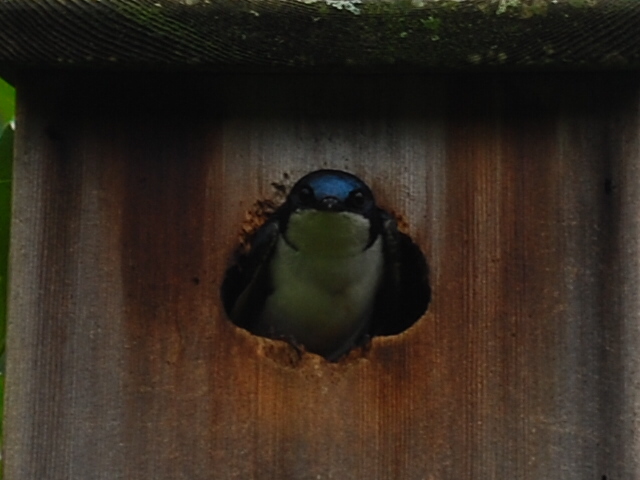
I believe that an agreement was reached this morning; between the feuding tree swallows and bluebirds, of my yard.  The tree swallows took over the nesting box that the bluebirds had chosen and the bluebirds moved to the nest box in the upper end of my garden.

I think it was a good compromise, because the tree swallow seemed as if it may be one which was raised in the same box last year. On the day that the swallows left; last June, there were 2 adults and 3 young.  When the tree swallows came back in March; there were 5.

The annual bird wars normally last; until a house wren moves in and takes over during the feud.  The bluebirds are usually the one that gets left out and moves on.
Perky Pet 50301 Wren Home Cedar Birdhouse


Posted by High Virginia Outdoors          Photography by High Virginia Images

Friday, April 1, 2011

One More Row


ONE MORE ROW:
Dedicate a single row of your gardening efforts this summer to help improve the quality of life for West Virginia’s homeless, disabled, financially struggling, and honored senior citizens. Just One More Row can make a big difference.
The current recession, with the skyrocketing cost of food and fuel, has made it increasingly difficult for many members of our West Virginia community to meet their needs. You can help by participating in the One More Row food drive. But, the time to do so is NOW.
We are seeking farmers and hobby gardeners from all across the state to make one simple pledge. Help alleviate hunger in West Virginia.
When you plant your garden this Spring, please commit to planting just one more row of vegetables, fruit, or herbs. Then, donate that share of the harvest to others who are in need.


One More Row


Monday, February 14, 2011

Garden Wonder

The poor old garden is in a standstill, waiting for spring, like everything else.  Not much is happening down there; under the snow.  But I do imagine that the chickweed continues to grow.  I don't even know if my garlic emerged last fall; when it was time, it was covered with snow.
Fifty degrees this morning with howling winds.  Rain and snow by evenings end. One day it will stop and spring will emerge; all will rejoice.  But soon after the heat will come and everything will be parched and dry.  We all enjoy the fleeting days of spring; but there is always too much that needs to be done.

Wednesday, September 29, 2010

Fresh Shittakes

I just went out and picked some fresh Shittakes from my white oak log. Inoculating this log; was one of the best garden projects I have done. I is really nice to have mushrooms, readily available. Especially during a dry year, when wild mushrooms are scarce.

I had Oyster Mushrooms on a yellow poplar stump. I probably got about 30 pounds of mushrooms each year, for 7-8 years from that stump. It finally disintegrated a couple of years ago.


Ma & Pa Shiitake Mushroom Log Kit with Shiitake Sampler Cookbook
10" Shiitake Mushroom Log with the Shiitake Sampler Cookbook

Monday, July 26, 2010

I NEVER KNEW

I have never gotten very excited about growing potatoes. I always plant about 10 pounds of seed potatoes in the early spring and forget about them. They grow, I hill them when they get about 8 inches tall, they proceed to get eaten up by potato beetles, bloom and die back. Then I usually get a few potatoes.

This spring I had some compost left over and planted some Yukon Golds, in a new location. They were planted in pure compost. These plants never had any pests present, they grew about 4 feet tall.

Last week; I noticed that they had produced fruits, resembling cherry tomatoes. I had never seen this before and looked them up. Healthy potato plants produce these fruits. The fruit is poisonous; being a member of the Nightshade family. They also stay green through maturity. Now I know. I guess that I had never seen a truly healthy potato plant before this year.
How to Grow Potatoes: A practical gardening guide for great results, with

How to Garden Potatoes the Easy Way!

The Rodale Book of Composting: Easy Methods for Every Gardener

Let it Rot!: The Gardener's Guide to Composting (Third Edition) (Storey's Down-to-Earth Guides)

Wednesday, July 7, 2010

Simply Garlic

Onions, Leeks, and Garlic: A Handbook for Gardeners (W. L. Moody Jr. Natural History Series)Growing Great Garlic: The Definitive Guide for Organic Gardeners and Small FarmersThe Complete Book of Garlic: A Guide for Gardeners, Growers, and Serious CooksGrowing and Using Garlic: Storey Country Wisdom Bulletin A-183

Harvest time is here; the aroma of homemade spaghetti sauce permeates the home. It is made with care, using only the freshest ingredients: basil, peppers, tomatoes, onions and dried up, flavorless garlic, imported from California or China. You can do better than that.

Nothing is simpler or less labor intensive to grow than garlic. It doesn’t require large spaces or tender loving care to be happy. You do need to acquire your bulbs now. Waiting until late September or early October will leave you disappointed. Start looking for your bulbs now. Farmers markets or local growers are a good starting point. They are harvesting their crops now and should have a surplus. Mail order and on-line seed suppliers are another good choice. I have my best production with the hard neck varieties of Siberian and German Extra Hardy. Polish Softneck is also a good choice. When you have acquired your bulbs, the hardest part is over.

In October, sometime around or shortly after Columbus Day, turn off the football game and go out to your garden area. Spade up your selected spot, about three feet wide and 10 feet long. This will allow you plenty of space for one pound of cloves. I like to plant mine in a border, around the area that I plan to put cabbage and broccoli in next spring. This seems to help confuse Cabbage Butterflies. Separate your cloves, plant each clove blunt end down, pointy end up, four inches apart and two inches deep. You can plant in rows or whatever pattern you desire. Garlic doesn’t care, as long as it is spaced properly. Cover the cloves as you plant them. Add some compost or organic fertilizers to the top of your bed at this time. By Thanksgiving, you should see new garlic sprouts emerging. When the ground freezes for the first time, throw about two inches of straw on top of your plants. Now; the next step is to leave them alone; until spring. Garlic plants may have a growth spurt if there is a warm period in January. Do not add additional straw to top them off at this time. You will smother the plants. I learned this the hard way.

Your plants will start growing quickly; when the daffodils start shooting up. Carefully rake the straw from your plants. Don’t worry about frost, it will not hurt your plants. They may look ugly for a few days, but they will recover finely. When the tops reach a height of around ten inches, sprinkle a couple of hands full of blood meal around your plants. Do this again in late May and just leave them alone. This is real time consuming, isn’t it?

During mid to late July, you will notice your leaves beginning to turn yellow. When the top two or three leaves turn brown, it is harvest time. Do not try to pull your plants. Dig up the individual bulbs. Rinse off any excess dirt, hang the entire plant in a shaded area, with air circulation. Do not try to dry the plants in direct sunlight. I dry mine in a gazebo, hanging from the rafters. When the foliage is brown and dry; cut it off. Leave about one inch of stem and snip off the roots at the base. You will have all the fresh garlic you will need. Store the excess in paper bags, in your refrigerator crisper. Keep some to plant for next years crop. The excess will store well for four to six months.

This was simple and not very time consuming wasn’t it? Enjoy.