Showing posts with label Caterpillars. Show all posts

Tuesday, August 28, 2012

IO

IO Moth (c) High Virginia Images
Do you ever wonder what that spiny, green, spider web laced caterpillar that is crawling across your porch will be when it grows up? You should.  I found this IO Moth (Automeris io) on my Carolina Wren wintertime boot nest, a few weeks ago. It hung around on my porch for a couple of days, until it disappeared. These caterpillars have a sting which somewhat reminds one of sticking your hands in a nettle patch. The caterpillar pupae overwinters in the leaf litter as a papery cocoon.

I am sure that most of you have seen the lovely moth; which this caterpillar turns into.

IO Moth (c) 2010 High Virginia Images

Monday, August 29, 2011

A Little Hope

I was beginning to believe that there was little hope for any Monarch reproduction; this year. But; today I found several caterpillars in one of my favorite milkweed stands. I was able to spot at least a dozen caterpillars of various sizes. I didn't venture into the milkweeds; the caterpillars I saw were from the road.

Maybe the Monarchs born on Backbone Mountain are a little hardier as adults and can withstand the Winter better in the mountains of Mexico. Just a thought.
I am really glad to see a few were able to survive. This has without a doubt, been a bad year for Monarchs.


Posted by High Virginia Outdoors
Photos by High Virginia Images (c) 2011 all rights reserved

Tuesday, August 23, 2011

Required Reading: Great References

A Field Guide to Warblers of North America (Peterson Field Guide)Caterpillars of Eastern North America: A Guide to Identification and Natural History (Princeton Field Guides)Mushrooms of West Virginia and the Central AppalachiansThe Butterflies Of West Virginia and their Caterpillars (Pitt Series in Nature and Natural History)
Good reference books make the joy of discovery. The Summer turns to Autumn and activity picks up in the natural world. Many species are on the move; in preperation for Winter.

Those who are observant can always find new things. Good references are the only way to become satisfied with your new discovery.

There are many books available for identification purposes. These are the four that I have found most useful.

I don't know why I couldn't put the links to these books at the bottom of the page; where I wanted them.


Monday, October 18, 2010

Colorful Caterpillar

Brown-Hooded Owlet
I had nearly given up looking for interesting caterpillars, for the season.  But was given a welcome gift this morning.  I have not seen this species in about five years.  I make sure and look for it, anytime that I am around members of the Aster family.
This is the Brown-hooded Owlet (Cucullia convexipennis). It feeds on members of the composite family. I never expected to find one on October 19th. This species could be the most colorful caterpillar of our region. The moth is dull brown and ugly.
I need to go out and get some better shots of this one, if the wind will stop blowing. I also just remembered that I do not have any Woolly Bear photos.
So if your looking for something to do, go out and explore your surroundings, you never know what you will find.

Sunday, September 5, 2010

Butterfly of the Month/September-Monarch

What other butterfly could be considered for September ? The Monarch (Danaus plexippus) is the logical choice. This winged wonder is highly visible, while making its way to wintering grounds in the mountains of central Mexico. This instinctive journey is one of nature's wonders. 
This  migration is amazing; because this adult butterfly has never before made this journey. This butterfly you see in September is most likely headed to the Sierra Madre Mountains, where the hibernate by the millions. In the spring, the emerging butterflies reproduce on their northward journey; replenishing the species, into southern Canada, by summers' end. Then the southerly migration begins, as autumn nears.
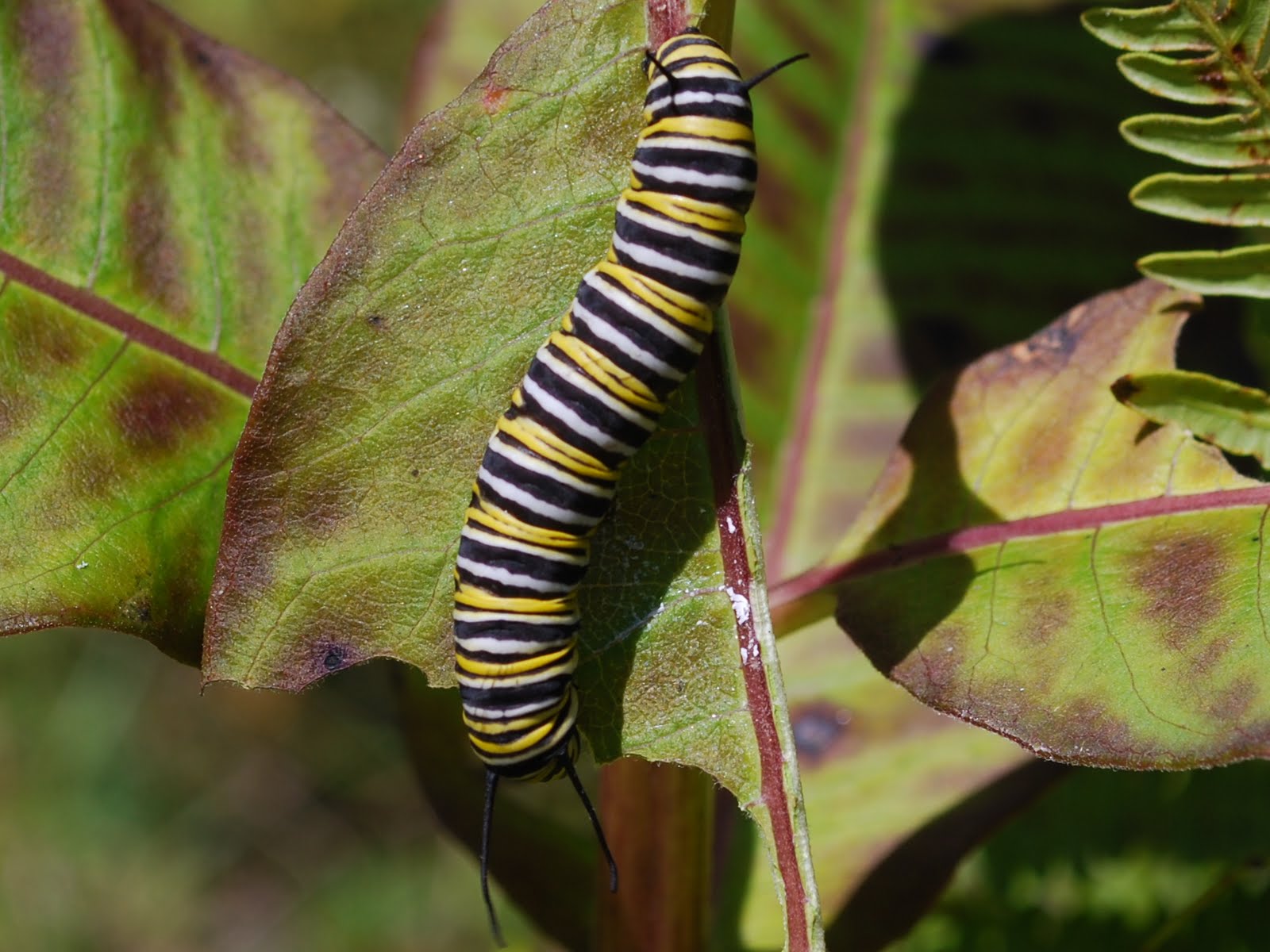
Most of us are familiar with the distinctive caterpillar of the milkweeds. The larvae feed, until ready to preform a J-shaped hanging quiver. This suspended caterpillar forms a chrysalis. The adult emerges from this chrysalis and the cycle is repeated.

The September Monarch is truly a winged-wonder.

Monarch Butterfly   Monarch and Milkweed Monarch Magic!: Butterfly Activities & Nature Discoveries (Williamson Kids Good Times!(Tm).)


monarch canvas prints

Friday, July 9, 2010

Spiny Oak Slug

The Spiny Oak Slug (Euclea delphinii) can be found from June to October. The colors of this caterpillar are highly variable, ranging from tans to greens and oranges. It feeds on many woody plant species. This one is on a blackberry leaf.

Caterpillars of Eastern North America: A Guide to Identification and Natural History (Princeton Field Guides)

nature photos