Showing posts with label Butterfly. Show all posts

Thursday, August 23, 2012

Ya Never Know

Common Ringlet (c) High Virginia Images 2012
Yep, you just never know what you may find; if you just look. I was sitting along Rt 66 in Pocahontas County, WV today; finishing off a slice of pizza and thought about taking a photo to submit to the Pocahontas Nature Club. I hadn't posted anything to their site in a while and hadn't taken any photos for a couple of days. I saw a Monarch laying eggs on a milkweed, but it headed across the road to the golf course. I was scanning the un-mowed field for some type of other butterfly activity and noticed what I thought was probably an Eastern-tailed Blue sitting on a goldenrod, just a few feet away from my truck. Out comes the camera and as soon as I got a little closer, I realized that this was something different. The Common Ringlet (Coenonympha tullia) is a butterfly normally found in Alaska, Canada, Northern US and the Pacific Coast. But here it is in good old Pocahontas County, WV. I know that one other was found in the Durbin area a couple of weeks ago. So, be on the lookout, ya never know what you may find. You'll never find anything, unless you look.

Posted by High Virginia Outdoors (c) 2012 All Rights Reserved

Tuesday, August 14, 2012

A Nice Find !!

Carolina Satyr  (c) High Virginia Images 2012
I was returning home from Thomas on Saturday afternoon and decided to take the Sugarlands Road-St. George-Clover Run route back. I was intending to try for a few good mushroom photos. To say the least, mushrooms were a bit sparse on this fine day. It didn't make much difference to me; as this is always a nice ride, no matter the season.

There was a group of Common Mergansers on the Cheat; fifteen in total and close to the road. A female with her brood. I had to go down the road and turn around. I was in luck, they were still there when I got back. I needed to change lenses and was crouched behind some shrubs; feeding the deer flies and heard the dreaded scrape. A pair of kayaks were scraping there way downstream and went right through the mergansers. Oh, well. I took 2 dragonfly shots and headed on downstream. I got on Rt.72 and then Rt.38 and turned up Clover Run Road, still hoping for some fungi. Nothing worth slowing down for. The dogs were getting restless.

I pulled into there favorite squirrel and bunny chasing spot and let them explore. We walked awhile and I got tired of untangling Ralphie. I brought them back and tied them to the truck, so they could roll in the grass; which is one of their favorite sports. I sat there and scanned the area for something, anything to photograph while the dogs were entertaining themselves. Just a Red-spotted Purple was to be found, I guess it will have to do. The wind was picking up as I chased it around and I got some real bad photos. I noticed something was wrong with the pictures. I have a tendency to push some unintended buttons, when putting the new camera away. I haven't quite gotten used to it yet. The ISO somehow managed to get switched to 400 on this bright, sunny day. Not Good.

I was sitting on the tailgate, watching the beagles roll and fake fight and noticed a little brown butterfly, perched on a poison ivy leaf. There were 4 or so of these little brown butterflies flitting around. Well, I don't have many photos of little brown butterflies and the camera was now set up properly. So, I was in pursuit and of course at this time, the wind decided to pick up. I managed to get one decent shot of the little brown butterfly and by that time the dogs were ready for some ice-water. So we headed on home.

I looked the butterfly up when I downloaded to the computer and decided it was an Appalachian Brown (Satyrodes appalachia) that made sense and we have them in our area. Case closed, or so I thought. On Sunday, I was trying to identify some skipper photos (the birding community thinks sparrows are hard), try skippers. I found Butterflies and Moths of North America, a citizens science database for identification and sighting recordings (Really Nice). I submitted some skipper photos for a final answer as to what they were and I threw in the Appalachian Brown for their records. I received an e-mail shortly after identifying the skipper, along with a great notation that this photo wasn't an Appalachian Brown, but was a Carolina Satyr (Hermeuptychia sosybius), which until now has never been recorded and confirmed in the mountains of WV!! Well it has been, Now! What a great  surprise. This butterfly has been found in the southern and western portions of WV. According to the species research I did, it has never been recorded and confirmed East of I-79.

Like I have said before, you never know what you may find; if you just sit and stare.

Posted by High Virginia Outdoors  Photos by High Virginia Images (c)2012 All Rights Reserved


Saturday, August 4, 2012

Beauty and the Beast

We are trained in our minds to associate butterflies and flowers. But did you know that there are some butterfly species that never use nectar as a food source? The Northern Pearly Eye (Enodia anthedon) is one such species. This butterfly is a species of wet woodland areas. The host plants for the larvae are members of the panic grass family.

The Northern Pearly Eye feeds on carrion, dung, fermented fruit and tree sap. Judging from the fruit flies; this coyote turd seems to be a Northern Pearly Eye smorgasbord. This photo was taken on 8/4/12 at Pleasant Creek WMA in Barbour County, WV.

(c) High Virginia Outdoors 2012 All Rights Reserved

Friday, June 29, 2012

They Got That One Right !

I was sitting out in the edge of my yard on Tuesday and a little yellow butterfly fluttered by. I had never seen a yellow butterfly that was smaller than the normal sulphur species'. I managed to chase it down and get a good look as it stopped on some white clover.

I went into the house to get my camera; of course the camera was outside in the truck on the other side of the house. Just as standard procedure plays out the little butterfly was nowhere to be found when I returned.

Often, when you look something unfamiliar up; you wonder how they came up with a name for something. Not in this case; they finally got one right. It was a Little Yellow (Eurema lisa) butterfly. It is more common in WV in the southern counties and along the Ohio River. I am pretty sure that I have never seen one around here. We may notice more smaller butterflies this year, since there doesn't seem to be many big ones around.

Posted by High Virginia Outdoors  (c) 2012 All Rights Reserved

Sunday, March 11, 2012

First Butterfly

I saw my first butterfly of the year; a Mourning Cloak, this evening on the Right Fork of Middle Fork in Upshur County, WV. The Spring Peepers were calling loudly and laying eggs. I also saw several clusters of Wood Frog eggs. I flushed a woodcock in the same wetland area. No trout, but the dogs had fun. It sure was nice to enjoy a warm evening, thanks to daylight savings time.

Tuesday, September 6, 2011

ONE

This Monarch hatched from my strawberry patch, this morning. It was up there in the wide open attempting to dry its wings. I brought it down; this evening and put it in the protection of the morning glory's on the porch. It seems much happier. At least I got one !!!

Wednesday, August 31, 2011

Butterfly of the Month/ September

The Butterflies Of West Virginia and their Caterpillars (Pitt Series in Nature and Natural History)
I sat for about an hour today on the edge of a wildflower meadow. I was looking for a subject for the September butterfly. There wasn't much happening; so here it is. The Pearl Crescent (Phyciodes tharos) is a very common butterfly of open areas. This species has multiple broods and can be encountered from late-April until mid-October.

The caterpillar host plant is the many species of Aster. The Pearl Crescent can be found statewide; wherever Asters grow.

Posted by High Virginia Outdoors

Photos by High Virginia Images (C) 2011 All Rights Reserved

Friday, July 29, 2011

Something Is Wrong

This is my joe-pye weed on August 2, 2010. It is in the same stage of bloom today and there was one Eastern Tiger Swallowtail and one Silver-spotted Skipper. I do have two Spicebush Swallowtails and a couple of Pearl Crescents. That is pretty much the whole show. This is without a doubt the worst year for butterflies that I have seen. On the bright side, I have numerous Hummingbird Clear-wings; more than I have ever seen.
I do not know what has happened, but something isn't right. There were quite a few tiger swallowtails here this Spring; when the Yellow Poplar was beginning to leaf out. They have since disappeared. I didn't even have very many Cabbage Whites bothering my cabbage and broccoli. I hope they don't return later to devastate my kale. I have seen a couple of sulphurs and a few Least Skippers; fluttering around. There were two Eastern Commas' in the compost pile this morning. I am hoping for a strong late-season performance from the butterflies. I have a lot of milkweed out there; going to waste.


Photos by High Virginia Images (c) All Rights Reserved

Saturday, July 2, 2011

Butterfly of the Month/July

Butterflies seem to be present in very low numbers right now. I went out a little while ago searching for a butterfly of the month subject and had little success. There were a couple of sulfurs rapidly flying around; they presented no photography opportunities. I saw one cabbage white and no swallowtails of any kind. The only species present today in any significant numbers was the familiar Silver-spotted Skipper (Epargyreus clarus) and you had to look for them.
The Silver-spotted Skipper is our largest skipper. It is common throughout North America; from Florida to California north to British Columbia and east to Quebec.
This species is found wherever black locust is present. It may be found in any open area throughout the High Virginia's. The adult butterfly feeds on a wide variety of summer flowers. The larvae host plants include many members of the legume family. The first brood of butterflies emerge in May and June. The second large brood begins flying in July and has the largest number of butterflies. The final partial brood emerges in August. Therefore the Silver-spotted Skipper should be easy to find throughout the Summer (even the Summer of 2011).
The Butterflies Of West Virginia and their Caterpillars (Pitt Series in Nature and Natural History)

Photography by High Virginia Images

Sunday, September 5, 2010

Butterfly of the Month/September-Monarch

What other butterfly could be considered for September ? The Monarch (Danaus plexippus) is the logical choice. This winged wonder is highly visible, while making its way to wintering grounds in the mountains of central Mexico. This instinctive journey is one of nature's wonders. 
This  migration is amazing; because this adult butterfly has never before made this journey. This butterfly you see in September is most likely headed to the Sierra Madre Mountains, where the hibernate by the millions. In the spring, the emerging butterflies reproduce on their northward journey; replenishing the species, into southern Canada, by summers' end. Then the southerly migration begins, as autumn nears.
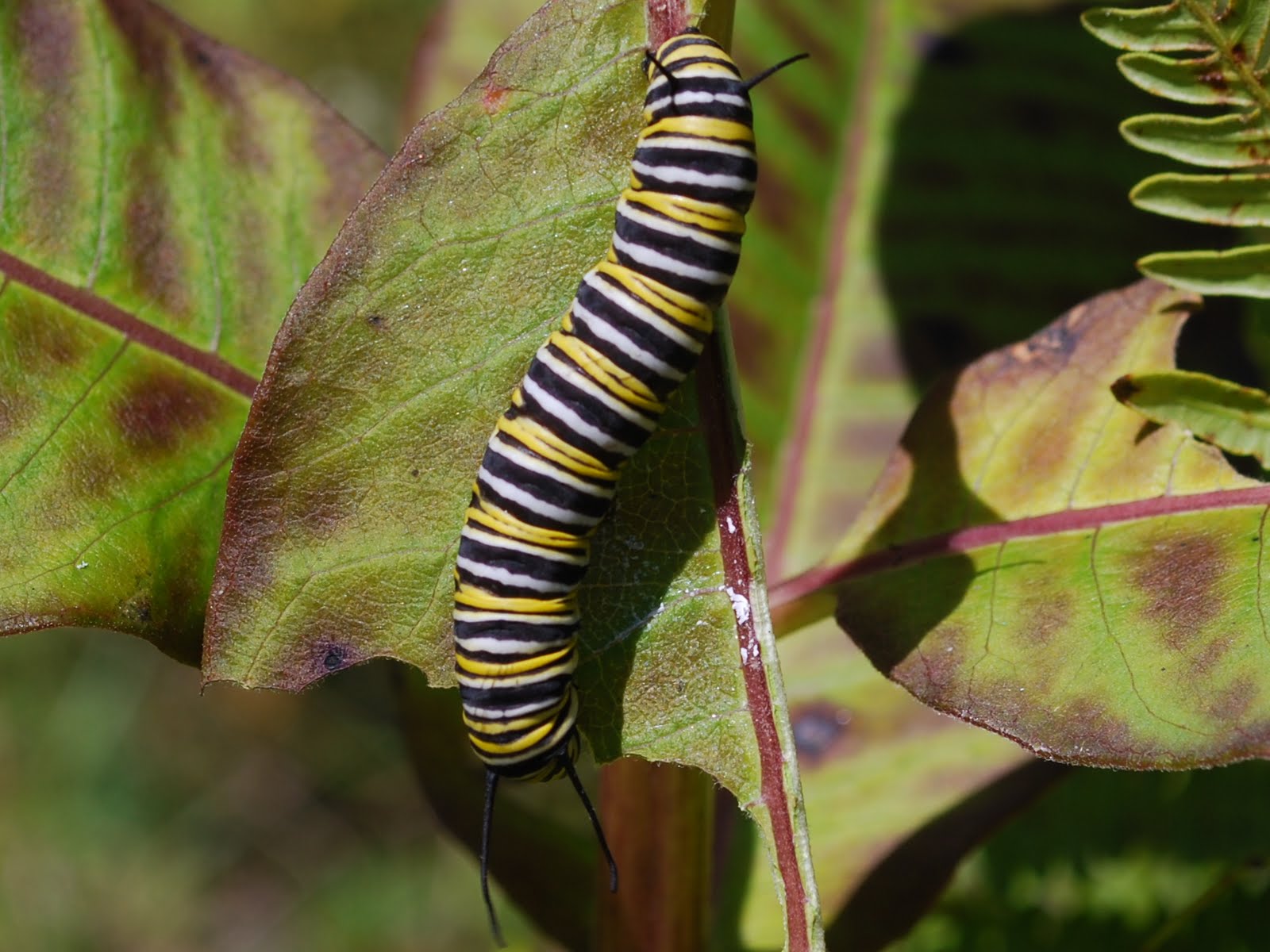
Most of us are familiar with the distinctive caterpillar of the milkweeds. The larvae feed, until ready to preform a J-shaped hanging quiver. This suspended caterpillar forms a chrysalis. The adult emerges from this chrysalis and the cycle is repeated.

The September Monarch is truly a winged-wonder.

Monarch Butterfly   Monarch and Milkweed Monarch Magic!: Butterfly Activities & Nature Discoveries (Williamson Kids Good Times!(Tm).)


monarch canvas prints

Saturday, July 31, 2010

Butterfly of the Month/August-Eastern Tiger Swallowtail


The Eastern Tiger Swallowtail (Papilio glaucus) is probably the most noticable butterfly of our region, during the month of August. You may not know that the female is more often black as opposed to yellow. This is one of natures' ways of mimicing. The black form females resemble the Pipevine Swallowtail and are less likely to become bird food.

The most common larval host species is Yellow-poplar and black cherry.Although, there is usually a caterpillar to be found on the spicebushes in my yard.

These large and plentiful butterflies will be found feeding upon the flowers of Joe-pye Weed, Ironweed, milkweeds and thistles. Therefore, they can be found at nearly every location.
tiger swallowtail canvas prints
swallowtail framed prints

Saturday, July 10, 2010

West Virginia White

The West Virginia White (Pieris virginiensis) is a woodland butterfly, which is found in the mountain regions. This butterfly can be found in forest clearings during April and May. the preferred host plants are rockcresses and toothworts. I photographed one ovipositing on a garlic mustard at Mingo, in Randolph County.

Butterflies of North America (Kaufman Focus Guides)

butterfly photos

Friday, July 9, 2010

Common Wood Nymph

The Common Wood Nymph (Cercyonis pegala pegala) is a common butterfly of streamside habitats. It can be found from June until September. They are very common in the Canaan Valley area. this butterfly prefers to feed on sap and fermenting fruits. The caterpillar can be found on Poverty Oatgrass (Danthonia spicata) and members of the bluegrass and bluestem grass families.

The Butterflies Of West Virginia and their Caterpillars (Pitt Series in Nature and Natural History)

butterfly posters